Improve the relations with others considering cognitive distortions

Usually, our relations with others are based on our ideas about them and our positionality. Those ideas can influence how we feel around different people and how we act when we meet them. For example, if you think that people belonging to a particular culture or subculture are dangerous you probably will avoid them or avoid specific areas associated with that social group. We are used to labeling and making generalizations to determine what or who threatens our well-being and when we have to act to protect ourselves against those threatening factors.

It is normal and even preferable to be able to distinguish what could harm us and to take safety measures but sometimes not everything we see as problematic really is. Then how could we know how to balance socio-emotional health, not become scared of anyone who has a different background, and not suffer from interactions with people who could affect us?

First of all, we shouldn’t forget that anyone is different, even if a person belongs to a specific social group socially associated with inappropriate behavior. It that doesn’t means that the person is problematic. That’s also happening because the majority is not always right in society but the majority have more social influence because of social power based on their access to society’s resources. Also, there’s no scientific evidence that specific cultures can be seen as problematic due to their own cultural belonging. Cultures are not inferior to each other, they are just different, according to social anthropology.

Our tendency to put different people who we don’t know so many things about in specific categories and attribute them a particular risk level come from an adaptatively thinking pattern that helped us to survive overtime, psychologists say, when human interactions were based more on physical domination and threats were everywhere. Today, when social life takes place according to other principles, many of these patterns are rather maladaptive aspects that make it difficult for us to live with others.

The psychiatrist Aaron Beck is considered to be a pioneer of therapy of maladaptive thinking patterns, known better as cognitive distortions. In the 1960s and 1970s Back developed cognitive behavioral therapy, still used today as an important therapy for psycho-emotional difficulties. Is important to mention that Back is not the only one who contributed to research and treatment of cognitive distortions, many other professionals worked overtime to improve their knowledge of how to support people to be adapted to the social environment.

Unfortunately, maladaptive thinking pattern is not the only aspect that clients have to fight with. Also the stigma of accepting that they confronting a psycho-emotional difficulty, especially in a culture where we don’t have a rich history of self-emotional care, many people have the tendency to tag those ones who talk about their emotional difficulties as wake people or maybe sick. In fact, any person is vulnerable in particular circumstances and this does not mean that if a person is vulnerable due to certain factors, that person is less clever or able than others but only human. The specialists claim that anyone confronts cognitive distortions at some level.

Furthermore, not anyone who confronts difficulties like cognitive distortions presents a signing of mental illness, anyone can have it, are just risky thinking patterns that can affect our emotional state and our social relationships if we maintain it as a habit to think about social reality. An important step recommended by cognitive behavioral therapists in dealing with socio-emotional difficulties is to learn to accept that sometimes our thinking way can be risky and to recognize when we tend to approach a situation inefficiently. I will expose here some of the most common cognitive distortions that can affect your social life quality.

  • Polarized thinking

Polarised thinking is the black-or-white thinking way, the habit to perceive reality in extremes abstracting the complexity of life and the probability of it existing between the extremes.

  • Catastrophizing

Catastrophizing is the tendency to perceive reality in a hyperdramatic way, avoiding accepting reality as a natural process of life.

  • Mind reading

Sometimes, some people are used to believing that they know what others think, based on their experiences. In reality, mind reading is an auto-confirmation of our own opinions about others, minimizing the importance of the dialog and avoiding approaching others, based on the conviction that we already have in advance about what is in the mind of the other.

  • Discounting the positive

The tendency to consider the worst scenario as more plausible, not paying enough attention to favorable aspects of the situation.

  • Labeling

Labeling means putting people or facts in inflexible categories based on your ideas, avoiding considering the social and psychological particularities.

  • Personalization

Personalization is when we think that most of the things that are happening around us are about ourselves, considering that what others do are directly connected with the way you are.

  • Emotional reasoning

Emotional reasoning means that reality consists of your emotions. Some people associate what they are feeling directly with how reality is and sometimes they also believe that what they feel says something about what will happen.

  • Mental filtering

Filtering the aspects and focusing only on negative aspects, ignoring the positive ones.

  • “Should” statements

„Should” thoughts are usually about the social and cultural expectation that creates a discordance between want we do and what it is claimed that we should do.

  • Overgeneralization

Overgeneralization appears when we extrapolate particular cases on a majority of individuals or situations that have one or more aspects in common without considering the logic of specifics and their effects of it.

Cultural diversity and social work in Romania

According with international acception of social work, respect for diversities is one of central principes of it and the social worker have as a main role to protect the rights of vulnerable social groups and to discourage discrimination. In social work practice it seems to be more complex than we think it has to be from a theoretical point of view. I don’t want to say here that practical and theoretical aspects are two separate ways to see it. The practice of a scientific profession is always based on theories formulated and tested in years or social research. I just want to highlight that social workers are also humans who can make mistakes and are influenced by the ideas of the society or community they belong to and being a social worker don’t means that automatically you will think out of all preconceptions about different people

Photo by ROCKETMANN TEAM

I do not intend to explain in this article the importance of cultural diversity and how it works based on social power factors, rather I try to explain why there are some misunderstandings in the practice of social work in counties from Eastern Europe, like Romania, about cultural diversity, based on my participant observation, and why it is important for us, as social workers, to be aware of it.

If we ask social worker students why they have chosen to do that we expect to find out that they were interested in social problems and wanted to make a change in people’s lives but in reality people have different reasons which determine them to choose to do things. For exemples when I worked with social work students during their university practice period, many students told me that they chose it because they wanted to have a specialization and they thought social work is easier to do than other specializations. I don’t think that it is a bad reason, we all have different personal motivations that guide our decisions and we try different things, which is a healthy behavior. I want to say that not always we know from the beginning what we want to do with it and what it means.

I think most of the social work universities from Eastern Europe integrate with success cultural diversity in their curricula, working with professors with strong values about promoting cultural diversity and protecting minorities rights. But people don’t live only in universities, they interact with other social environments and they come in university with strong ideas, formed during the previous educational cycles and in the social backgrounds they come from, being influenced by cultural prejudices regarding the problematization of specific social groups such as, for example, in Romania, the case of Roma or LGBTQA+ people.

Photo by Angela Roma

As Anna Kende et al. explains, in Central and Eastern Europe people are more confident about their discriminative ideas and don’t camufate it, as they do in other parts of Europe, because the social norms allow them to do that. Considering this pont of view I think the weak integration of cultural diversity principles of social workers in Romania comes from a social problem that systematically affects the entire social structure based on insufficient attention paid to cultural diversity and acceptance of differences between people and the encouragement of stigmas about those different from the dominant culture, regartles we talking about ethnicity, gender, sexual orientation, religion, class or others.

As social workers we work with people from different cultures, trying to evaluate their situation and support them to improve it. Working with people affected by social problems without a main understanding of mecanismes engaged in people privileges and desavantages and without a reference to the socio-cultural values ​​of the people we work with, we risk to avoid a intervention in a specific problem that we see as a normality based on preconception about particular social groups (for example, we can think that is normal for roma people to don’t have access to jobs because they don’t like to work, and we will avoid to considering assist them to find a suitable job). Or even if we want to support people whose standpoint we don’t understand through their lenses, our conclusions and recommendations will not suit the reality that those people live, being incomprehensible or impossible to adopt in their context.

The social workers who respect their profession and who want to provide quality social services have the responsibility to constantly improve their knowledge, from scientific sources, about the clients they work with and to try to discourage the prejudices based on misinformation that accentuate the risk situation of different people, because this is a part of it really means social work.

„Don’t exist a pure roma blood, we are all the same”

For 2022 Roma International Day I decided to share here an interesting observation of a Roma guy from Ukraine that made me think about how Roma racism works and about a main issue of racist thinking, in general. As a gadjo (term in romanes that means nonroma) social worker I was interested to find out an opinion from the standpoint of a roma person to improve my approach techniques because I didn’t wanted to make deeper our cultural differences and one of my main goals was to build a trust relationship together for an efficient cooperation.

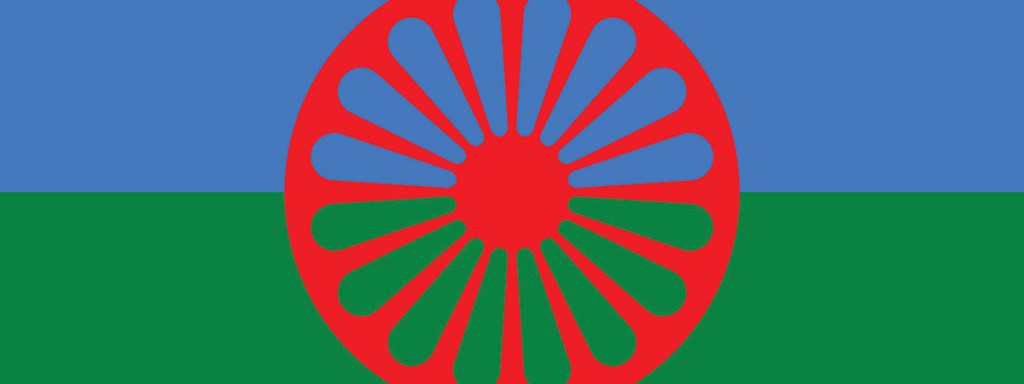
The flag consists of a background of blue and green, representing the heavens and earth, respectively. A 16-spoke red chakra, or spoked wheel, placed in the Center, representing the itinerant tradition of the Romani people.

When I worked as a social worker in a Ukrainian Refugee Services Center, I was also working with Roma families from Ukraine. If the situation was difficult for all Ukrainians in this period the Ukrainian Roma people situation seems to me to be worse because the prejudices about Roma people were observable between Ukrainian refugees but also from Romanian people who have to manage the situation of a consistent Ukrainian refugees wave. In my work there I observed that people were used to see roma people in kind of system of discrimination that make nonroma sees Roma families as criminals who are looking to steal from other people or who take benefits from themself from a risky situation. A relevant example in this was the news about `Ukrainian Gypsyes who allegedly stole a Russian tank` or the behavior of Ukrainians transiting the center who began to protect their goods when they were close to Roma persons. Also I witnessed to conflictual discussions in which nonroma Ukrainians accused Roma Ukrainians that they are too noisy or they don’t clean enough the space, aspects that can be connected with some prejudices about Roma people who are perceived often as culturally (or/and biological) accustomed to quarreling and not taking care of the hygiene.

In this context of prejudices about Roma people from Ukraine, historian of Romani history in Central Europe Michal Mižigár condemned the racist “jokes” and racist coverage of Ukrainian Roma fighting against the Russian aggressor. Also other publications interested in human rights made raportages about the situation of Ukrainian Roma refugees in Romania.

Bucharest, Romania – `Zero tolerance for racism`

During my work in the center I really appreciated the efforts of people to communicate with us despite our language differences. It was also the case of a roma guy who seems to be closest to me that I expected named me prala (a term in Romanes that means brother). He tried to tell me multiple times that I am roma even I answered every time that I am gadjo. After few days he explained me that:

In romanes language rom means human. We are all humans! Don't exist pure Roma blood, Roma people were travelers, they were traveling around the world, especially to countries like Romania and Spain and our blood has mixed over the time, we all are mixed, we don't know who has pure roots and who doesn't regardless of what ethnicity we are talking about. Our biological differences were invented in a specific historical context like the Nazism but it is not really relevant nowadays.

I told him that I agree with him but I think even if it is a good point we can observe that even those are obvious aspects, people still see fundamental differences between us that lead to discrimination sometimes. He continued to argue that:

This is happening because, for some reasons, people who have the power, our political leaders, don't want to admit that we are all the same, and that don't exist fundamental differences between us.

I think he had a really interesting observation that is also supported by many scientific studies. As the researchers say, and how it is understood from what that man said to me, we are not looking to diminish the cultural importance of ethnicity but to show that there are no relevant biological traits between people belonging to different races or ethnicities and no strict way of delimiting them because social life is often more fluid than we think it is.

Ukrainian Children’s Drawings – A visual expression of a crisis

When the Russian invasion of Ukraine began, a new social crisis arose in Europe. The crisis that has arisen has multiple dimensions, of which I would like to set out here two of them that seem relevant to me. First of all, this is about people fleeing from war machines that threaten their own lives and the lives of their families, trying to take refuge in neighboring countries and other people stuck in Ukraine who have to fight for the price of their life in a political conflict that doesn’t really belong to them. Secondly, war is not only on the battlefield, but also in the minds of the people, because the way war threatens our emotional state and the stability of everyone’s life, especially those close to the conflict, is also an important part of the conflict crisis.


In this context, social workers from all over Europe and especially from the countries bordering Ukraine, including Romania, had to adapt to another kind of challenges at a time when the COVID-19 pandemic has not yet ended, providing support to the people of Ukraine to deal with the threats of war giving them the chance to meet their basic needs but also creating social services for their social integration in new socio-cultural spaces from outside of Ukraine. Because war means dehumanisation of human beings and forces us to reject our own emotions, social workers close to the conflict were indirectly part of this process having to let their stress, insecurities and concerns about the spread of the war and mass murders that take place near them on a second position and and prioritize the emergency situation of the millions of people directly affected by the conflict coming from Ukraine.


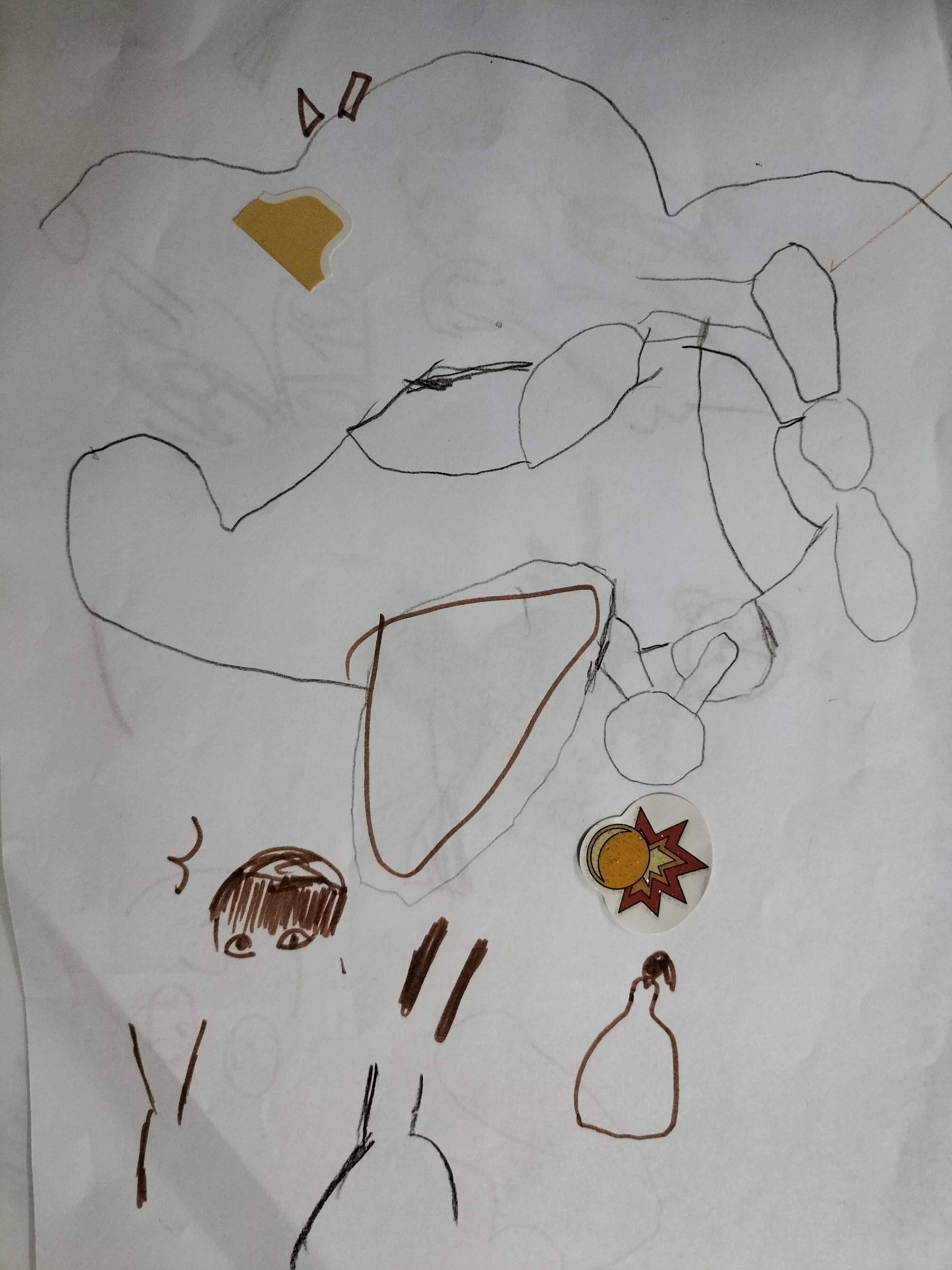
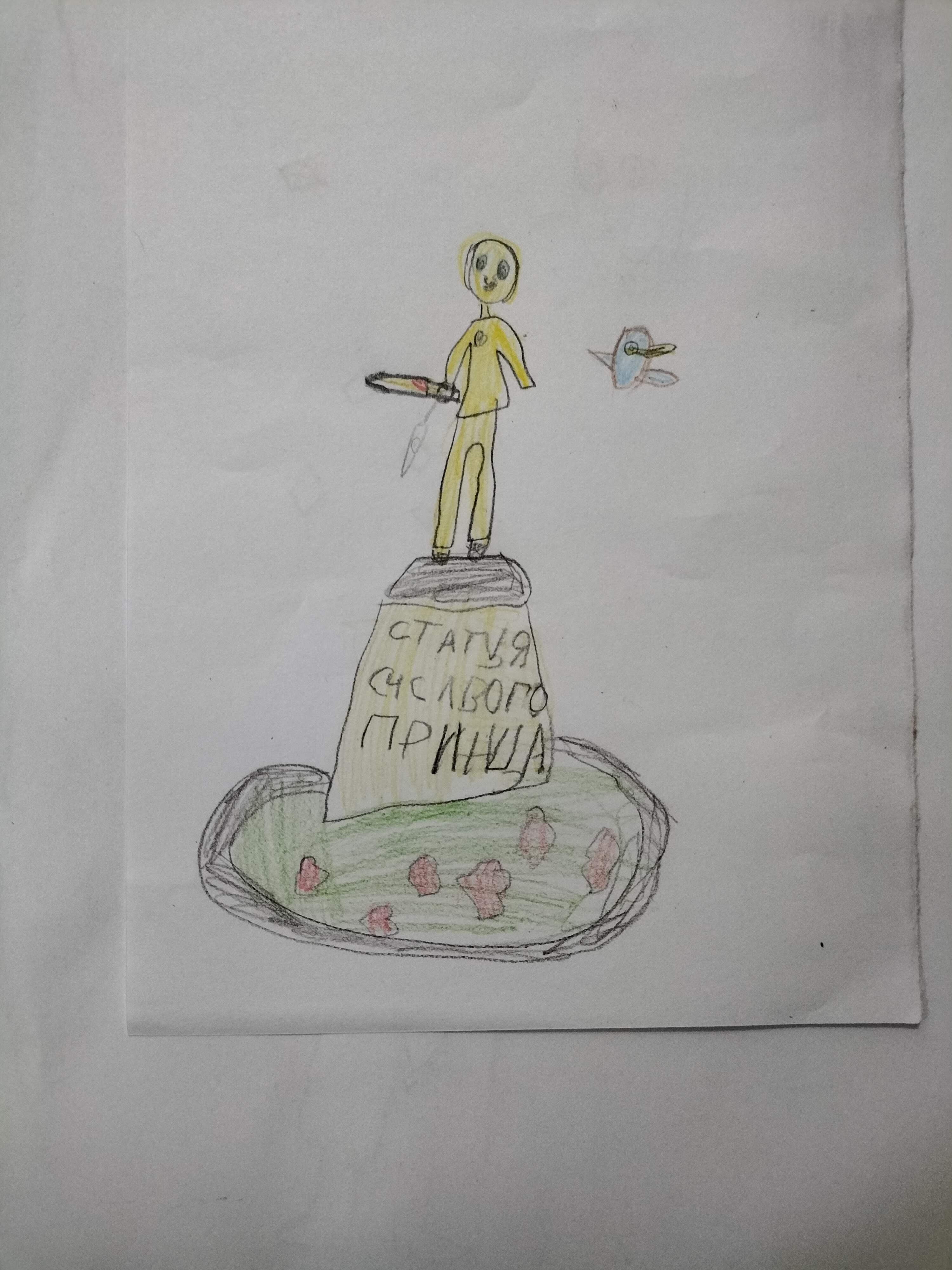
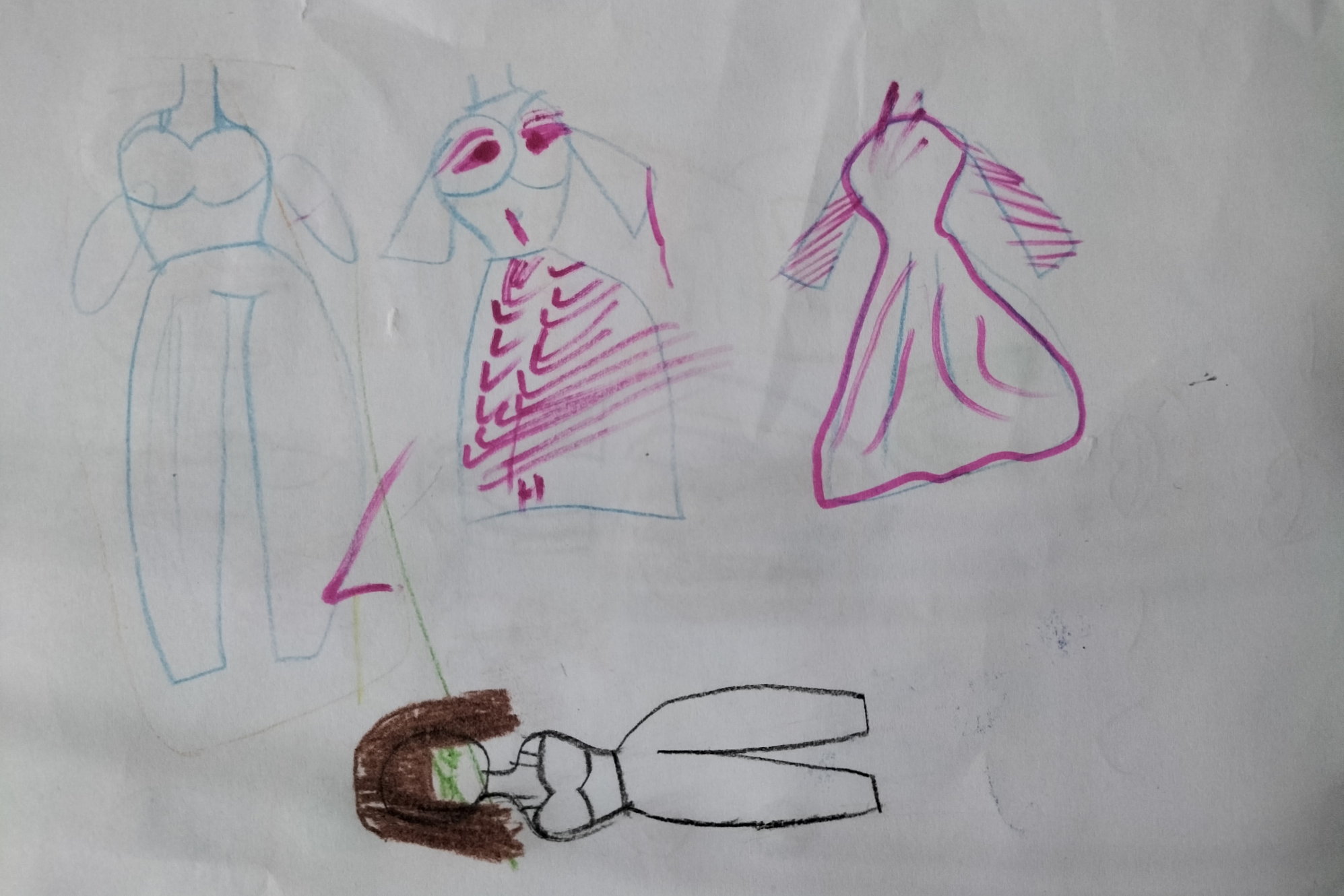
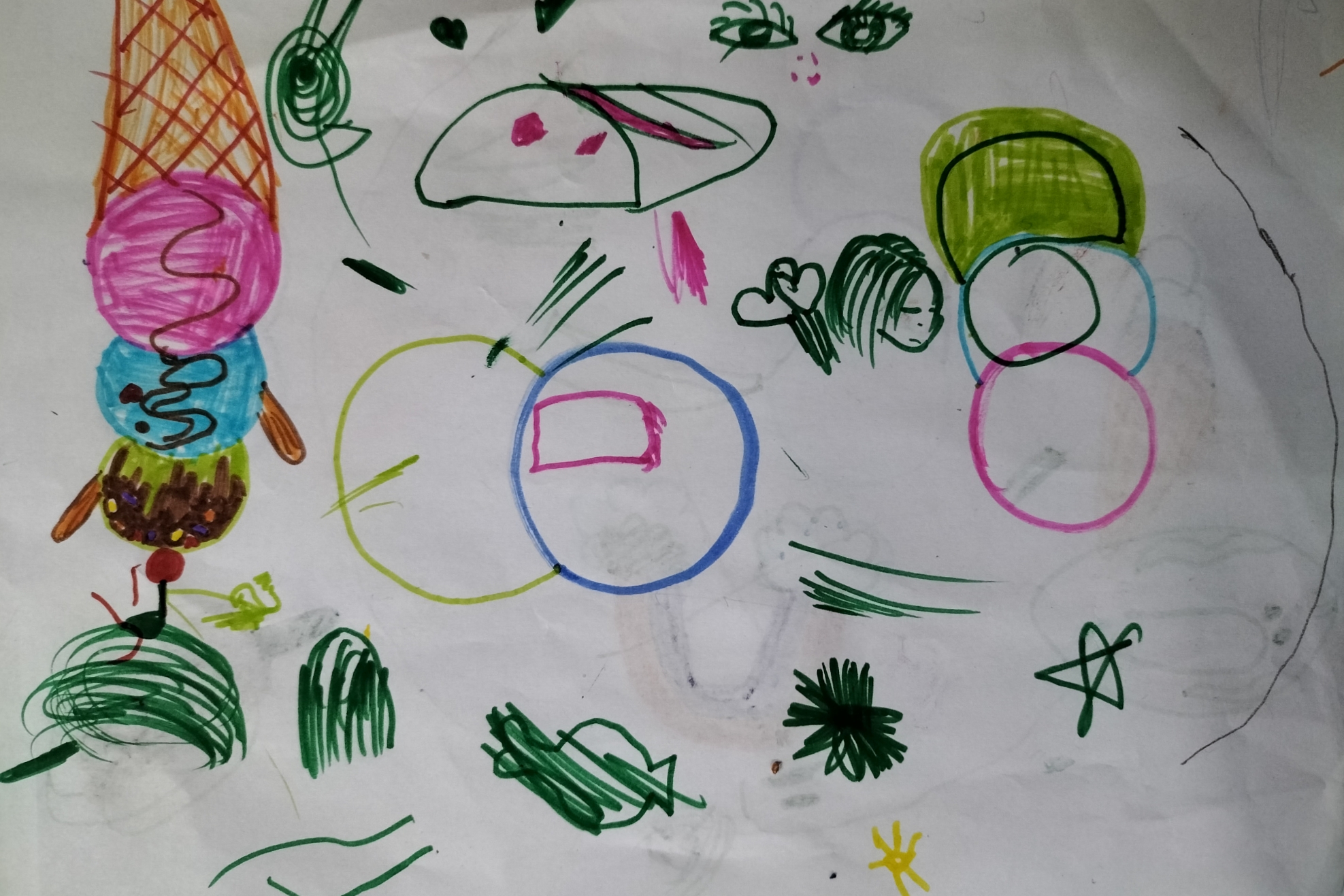
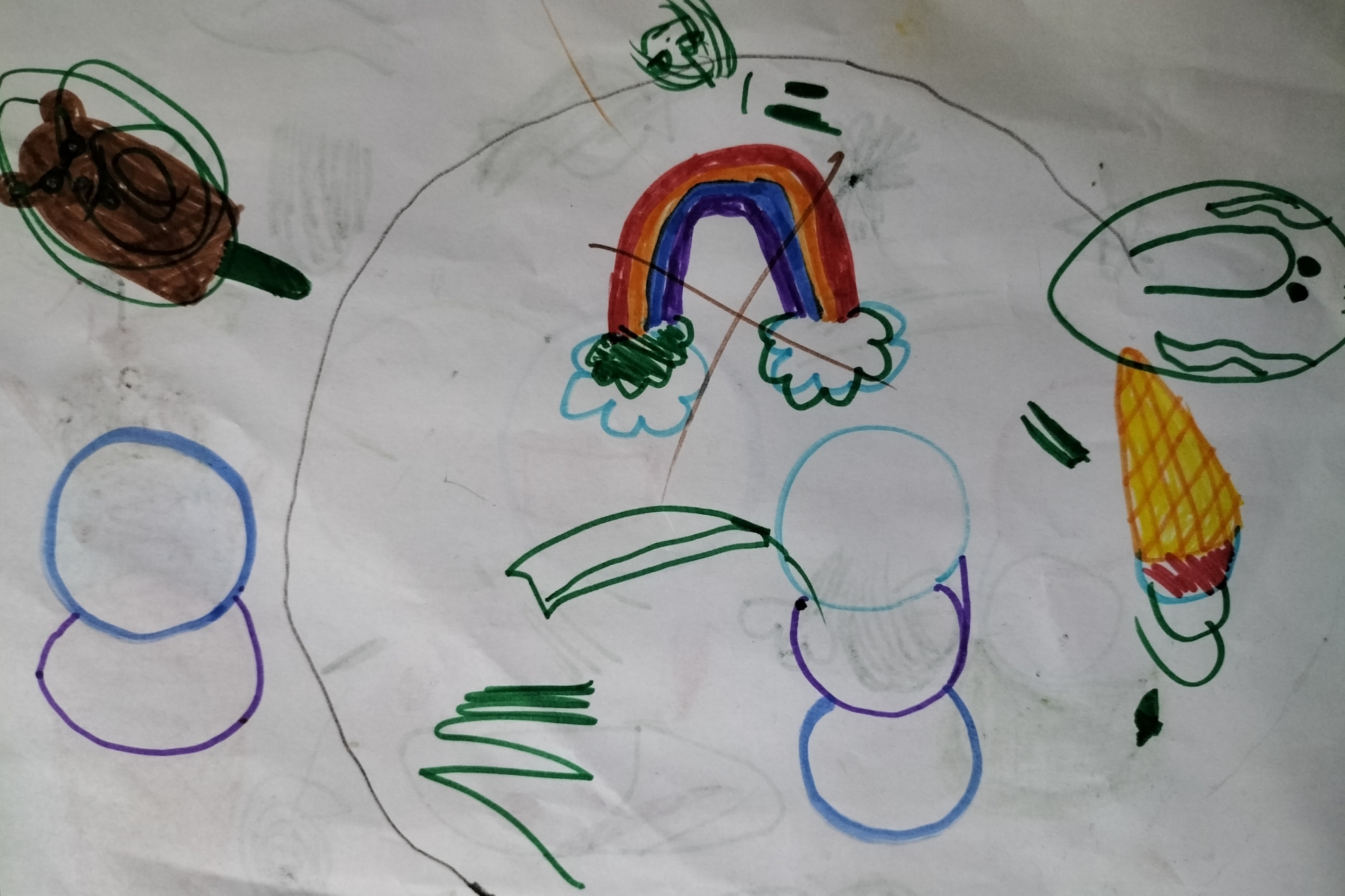
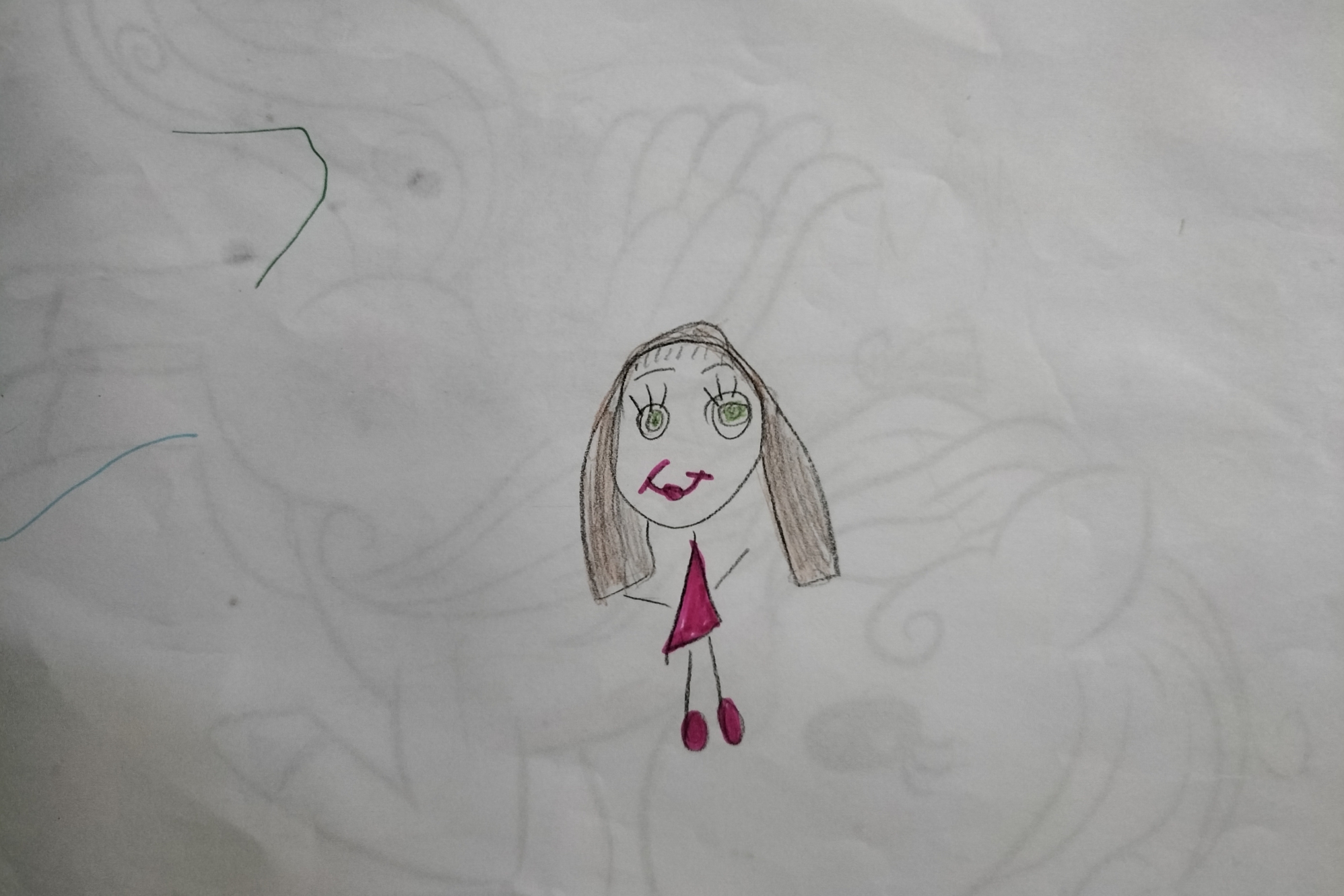
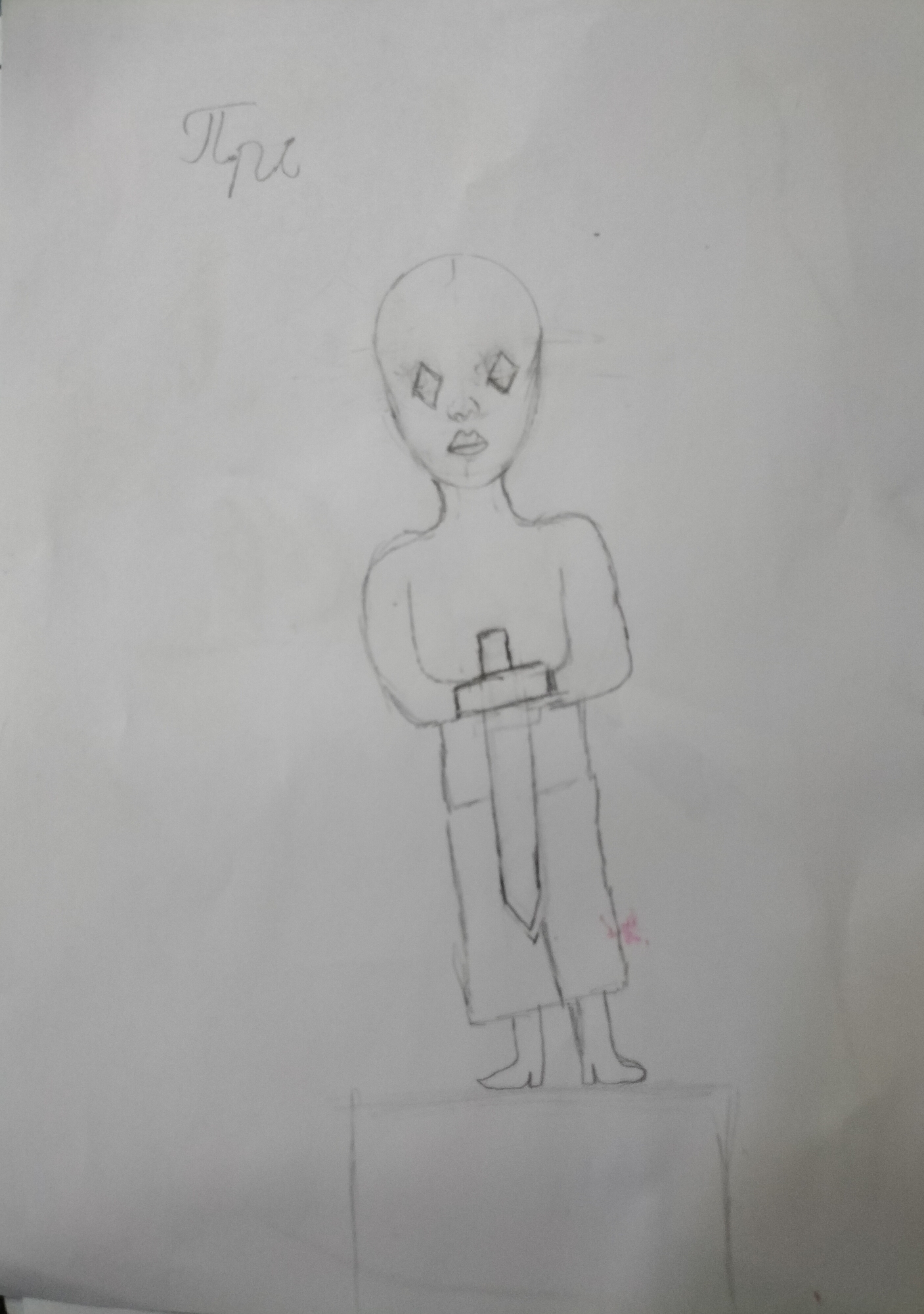
During this time I worked in a transit center in Bucharest for refugees from Ukraine where together with my coworkers we offered primary protection to Ukrainian families who have crossed the territory of Romania trying to build a safe temporary space for them where as many as possible of their needs are covered. According to statistics more than 600.000 people passed from Ukraine to Romania in March 2022. Working with Ukrainian families in the context of understanding difficulties caused by language barriers I observed that the Ukrainian children’s drawings have some aspects that can communicate consistent information about their perception of the situation of war and emotional state of them and their families and I think that it can serve as an assessment tool in social work practice.

Img.1 Aircraft Bombing / Img.2 ”Statue of a happy prince

Considering these ideas I started to follow Ukrainian children’s drawings and collect it to obtain information about the emotional needs of Ukrainian families and how I could approach their situation to improve their condition in the first stage of coming out from the conflict space. The children’s drawings helped me not only to understand them better but also to establish a trust relationship obtaining a greater openness to them than to me because from my point of view drawing sharing is emotions sharing.

The way home – separation from the space of safety

Chaotic hatching and anxiety

Body parts: the decomposition of the whole

Agglomerations of elements and indecision

Singular elements – loneliness and emptiness